
By Discount Drain & Sewer Cleaning Editorial Team · Updated 2026-08-19
Compliance requires adherence to the State of Wisconsin Plumbing Code SPS 381-387, adopted by City of Milwaukee ordinance, covering storm/sanitary sewers, water services, drains, vent piping, and fixtures both outside and inside structures. Inspectors verify proper grading, leak-free systems, and approved materials before issuing occupancy approval.
Milwaukee commercial plumbing compliance requires meeting Wisconsin Plumbing Code SPS 381-387, adopted by city ordinance. The City of Milwaukee inspects storm and sanitary sewers, water services, building drains, waste and vent piping, plus fixtures and equipment. You need proper grading for downward flow and leak-free systems. Discount Drain & Sewer Cleaning handles drain and sewer work supporting your facility’s code compliance across Milwaukee properties.
Key Takeaways
Milwaukee adopts Wisconsin Plumbing Code SPS 381-387 through city ordinance for all commercial facilities.
Inspectors examine storm sewers, sanitary sewers, water services, and private sewerage systems outside buildings.
Commercial plumbing inspections cover building drains, waste piping, vent piping, water distribution, and fixtures.
Commercial plumbing renovations require system assessments, design plans, and coordination to minimize operational disruptions.
What Plumbing Codes Apply to Milwaukee Businesses?
Milwaukee adopts the Wisconsin State Plumbing Code by ordinance. Every commercial building in the city must meet the state’s SPS 381-387 standards. That single rule covers a lot of ground: drain grading, fixture materials, backflow prevention, and water distribution all fall under it. Skipping a step here does not just risk a fine. It risks a failed inspection that stalls your tenants, your opening date, or your renovation timeline.
Commercial plumbing regulations Milwaukee property owners follow are not optional extras layered onto general building codes. They are the baseline for occupancy. Restaurants, medical offices, retail spaces, and multi-tenant buildings each get inspected against the same state-adopted standard, though your specific fixtures and usage will shape what inspectors focus on.
Why does one plumbing issue affect a whole commercial building?
Commercial plumbing problems rarely stay contained to a single fixture. A clogged restroom, a leaking water heater, or a sewer backup can interrupt employees, customers, tenants, and daily revenue all at once. That ripple effect is exactly why code compliance matters building-wide, not just at the point of failure.
What should property owners watch for beyond basic drain flow?
If you operate a food-service space, restaurant plumbing code MKE requirements bring extra layers, including grease management tied to health department grease trap Milwaukee rules. Grease traps that are undersized or poorly maintained lead to backups, odor complaints, and inspection failures.
Discount Drain & Sewer Cleaning provides professional plumbing services built to keep water moving safely through your property while supporting local code expectations. Compliance repairs add up fast, so honest, budget-friendly help matters when you’re closing gaps before an inspector finds them.
What Does a Milwaukee Plumbing Inspection Cover?
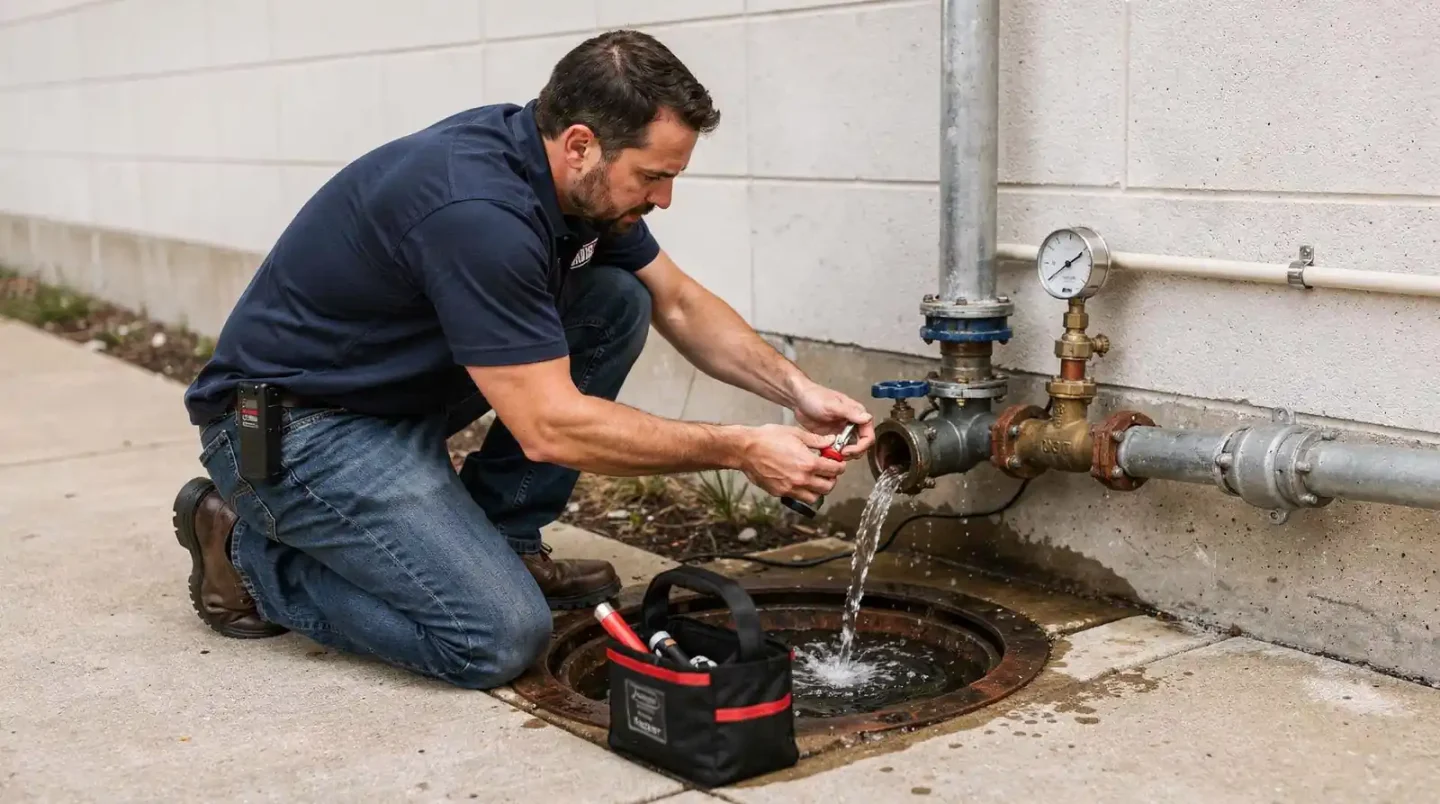
A Milwaukee plumbing inspection covers two zones: everything outside your building and everything inside it. City inspectors review commercial plumbing regulations Milwaukee property owners must meet before signing off on any completed work. Skip a step, and you risk delays that stall tenant move-ins or restaurant openings.
Outside your property, inspectors examine the infrastructure that connects your building to the city’s network. That means storm sewers, sanitary sewers, and water services all get checked for proper flow and condition. If your facility sits on a well or private sewerage system, expect that to come under review too.
Inside the building, the focus shifts to the plumbing your staff and customers use every day. Inspectors trace storm and sanitary building drains, waste and vent piping, and water distribution lines running to fixtures, equipment, and appliances. A single clogged floor drain or slow vent stack can be enough to raise a red flag.
Why does drain maintenance matter for passing inspection?
Clear lines keep water moving in the downward direction inspectors expect to see. Sewer and drain cleaning targets exactly those lines, clearing the debris and buildup that interrupt flow. Regular maintenance between inspections reduces the odds of a surprise failure.
What role does grease play in commercial plumbing compliance?
Restaurants and food service operations face closer scrutiny under restaurant plumbing code MKE requirements, largely because grease buildup causes so many backups. Following health department grease trap Milwaukee guidelines keeps your kitchen lines flowing and your inspection results clean.
Bringing the right tools and hands-on experience to a stubborn clog helps you avoid the blockages that trigger a failed inspection in the first place.
How Does Restaurant Plumbing Code Differ in Milwaukee?
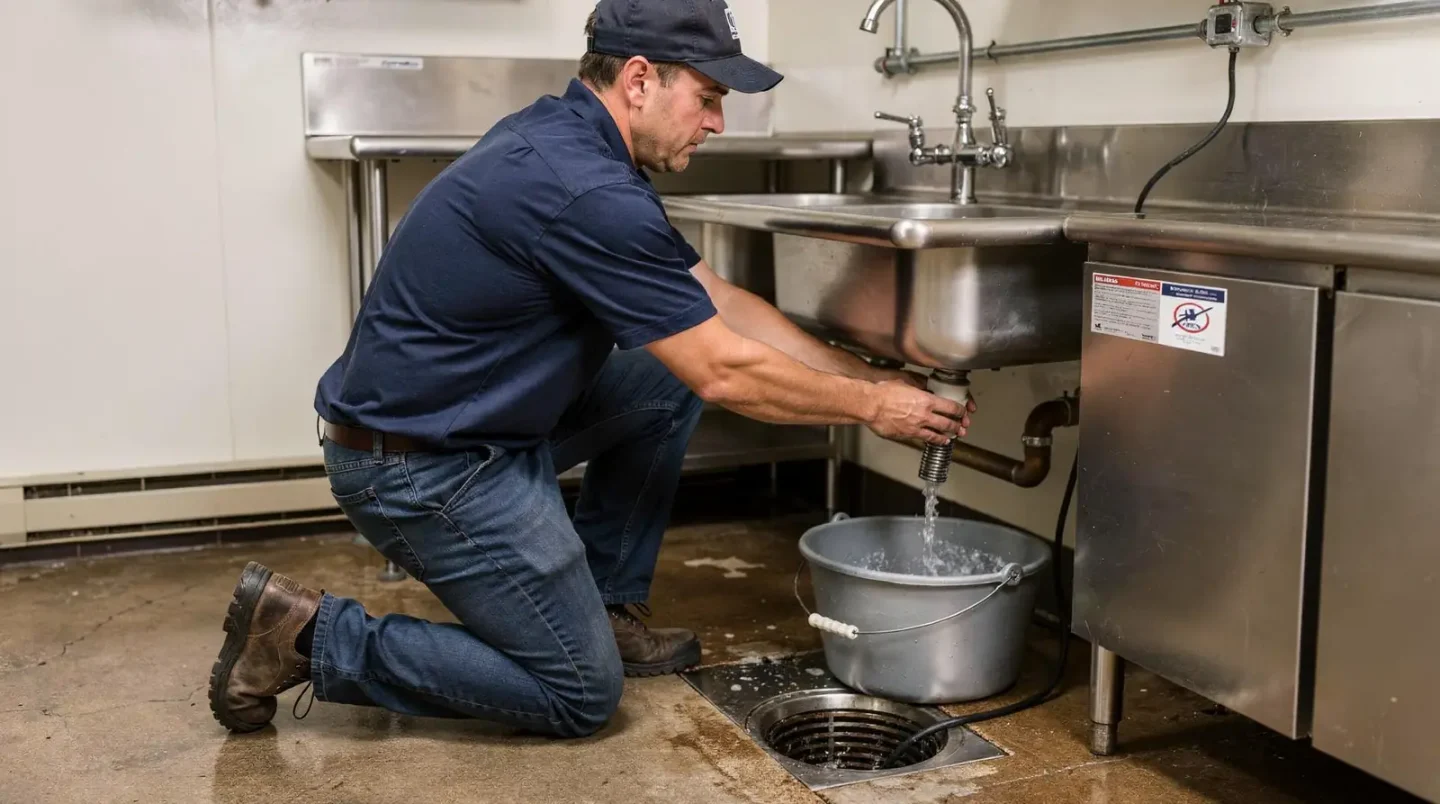
Restaurant kitchens face stricter plumbing demands than a typical office or retail space in Milwaukee. Grease-heavy wastewater pours from fryers, grills, and dish pits every service, and that grease clogs kitchen drains fast if lines go unmaintained. Commercial-plumbing-regulations-milwaukee treat food-service properties differently for exactly this reason. Keeping your restaurant open often depends on staying ahead of buildup before it becomes a shutdown.
What makes restaurant plumbing code different from standard commercial code?
Restaurant plumbing code rules cover two separate systems working together. One side handles water supply, feeding handwashing stations, dish machines, and prep sinks with clean water your staff depends on daily. The other side manages drainage, carrying food waste, oils, and rinse water away from your kitchen. Both sides need to function properly for your restaurant to pass inspection and stay compliant.
Why does the grease trap matter so much for compliance?
The health-department-grease-trap-milwaukee standard exists because grease is the single biggest threat to a restaurant’s drain line. Left unchecked, it hardens inside pipes and triggers backups during your busiest hours. Regular professional line clearing keeps grease from building into a full blockage. It keeps your kitchen operating instead of closed for cleanup.
Cross-connection rules add another layer specific to food service. City inspectors prohibit any connection between your clean water supply and water from a questionable source. They prohibit discharging hazardous waste into the sewer system. For a restaurant running multiple sinks, dishwashers, and drains at once, that standard matters closely.
When a kitchen line or grease trap backs up mid-service, speed matters. Prompt professional response gets water flowing again and gets your doors back open faster.
What Permits Are Needed Before Renovation?
A Certificate of Occupancy stands as the non-negotiable requirement before any Milwaukee commercial space reopens after renovation work. New construction projects and property renovations both require this certificate before the doors open for business. Skipping this step risks fines, forced closures, and lost revenue during your busiest season.
Getting to that certificate takes more than filling out one form. Milwaukee’s commercial-plumbing-regulations-milwaukee framework routes projects through multiple city departments, each running its own inspections and compliance checks. Building safety, zoning, and plumbing officials all weigh in before a building earns clearance to operate.
Why does coordination matter so much during a plumbing renovation?
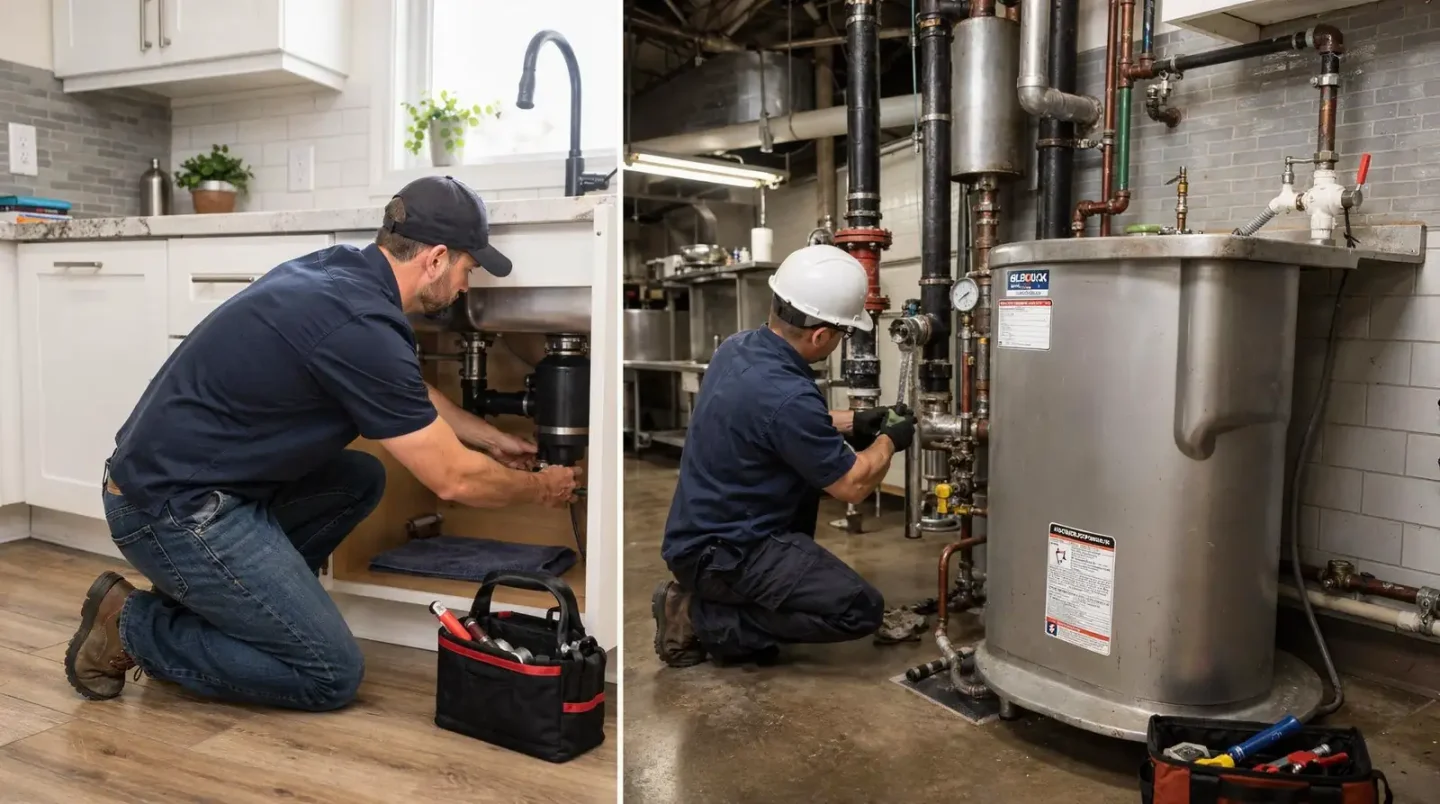
Plumbing upgrades rarely happen in isolation. Renovating a commercial system means coordinating carefully with existing pipes, fixtures, and infrastructure already in the walls. Multiple trades — electrical, HVAC, structural — touch the same spaces, and one miscommunication triggers a failed inspection and a stalled permit.
What should restaurant owners plan for specifically?
Kitchens face extra scrutiny under restaurant-plumbing-code-mke standards, since food-service plumbing carries higher public health stakes. Grease disposal draws particular attention: the health-department-grease-trap-milwaukee requirements govern how wastewater from cooking operations gets treated before it leaves the building.
Before you break ground, confirm every permit tied to your project scope:
Building permit for structural or layout changes
Plumbing permit for new fixtures or rerouted lines
Health department sign-off for grease trap sizing and placement
Final inspection scheduling ahead of your Certificate of Occupancy request
Since renovation missteps mean costly downtime, bringing in a dependable plumbing partner to review your water supply side early helps new work clear inspection the first time.
How Can You Stay Compliant and Avoid Downtime?
Staying compliant starts with routine drain maintenance, not last-minute scrambling before an inspector arrives. Milwaukee commercial properties that schedule honest, budget-friendly drain cleaning before small clogs turn into big problems sidestep the surprise costs tied to a failed inspection. Waiting until a line backs up costs more than prevention ever does.
A backed-up drain does not wait for a convenient moment. When wastewater stops moving through your Milwaukee building without warning, fast help limits the disruption to tenants, staff, and customers alike. The longer a blockage sits, the more it threatens your daily operations and your standing under commercial-plumbing-regulations-milwaukee.
What should restaurant owners know about grease and drain compliance?
Kitchens face extra scrutiny under restaurant-plumbing-code-mke, since grease buildup causes most restaurant drain failures. Following health-department-grease-trap-milwaukee guidelines means keeping traps clean and lines clear year-round, not just before a scheduled review. Property owners who partner with an experienced drain and sewer team gain the tools. Know-how to clear blockages before they escalate into code violations.
Does upgrading old plumbing actually reduce downtime?
Yes. Facilities that get plumbing upgrades right the first time run smoother and cost less to operate afterward. That accuracy also keeps your building compliant for years, not just until the next inspection cycle.
Consider these habits for staying ahead of problems:
Schedule preventive drain cleaning on a set calendar, not only after a clog appears.
Call for prompt service the moment a backup starts, before it spreads to other fixtures.
Keep grease traps maintained consistently to satisfy health department expectations.
Work with a team that brings proven tools and hands-on experience to every job.
FAQ
What plumbing code governs Milwaukee commercial buildings?
Milwaukee adopts Wisconsin Plumbing Code SPS 381-387 through city ordinance, covering storm/sanitary sewers, water services, drains, vent piping, and fixtures both outside and inside structures.
What areas do Milwaukee plumbing inspectors examine?
Inspectors review two zones: everything outside the building, including storm and sanitary sewers, water services, and private sewerage systems, plus everything inside, including drains, waste piping, vent piping, and fixtures.
What extra requirements apply to restaurants and food-service spaces?
Restaurant plumbing code MKE requirements add grease management tied to health department grease trap Milwaukee rules; undersized or poorly maintained traps cause backups, odor complaints, and inspection failures.
Conclusion
In closing, staying compliant with Milwaukee’s commercial plumbing regulations protects your business, your customers, and your bottom line. By partnering with professionals who understand these requirements inside. Out, you ensure every installation and repair meets code—giving you peace of mind and keeping water flowing safely through your property. We’re here to help you navigate these standards with clarity and confidence, so you can focus on running your business.